Last winter, watching my heating bills climb while my traditional masonry fireplace consumed log after log with minimal heat output, I finally admitted that something needed to change. My beautiful 1970s stone fireplace was essentially an expensive decoration that sent most of its heat straight up the chimney while cold drafts crept around the damper. After months of research and dealer consultations, I invested in a modern EPA-certified wood-burning insert that has completely transformed both my heating costs and my relationship with wood heat. The technology advances in these contemporary inserts make them almost unrecognizable compared to the drafty fireplace inserts my parents installed in the 1980s.
The selection process revealed how sophisticated modern wood-burning technology has become in recent years. Today’s EPA-certified inserts feature catalytic or non-catalytic secondary combustion systems that burn wood gases and particulates that older designs simply sent up the chimney as smoke and wasted energy. I ultimately chose a large non-catalytic insert rated for 2,400 square feet, featuring a massive ceramic glass viewing window, a built-in blower system, and claimed efficiency ratings approaching 80%. The price tag of $3,800 seemed steep initially, but the fuel savings and heating capacity justified the investment compared to my previous inefficient open fireplace.

Installation day taught me that proper insert placement involves far more engineering than I anticipated. The certified installer spent hours measuring clearances, assessing my chimney condition, and determining the correct liner size for optimal draft. My existing masonry chimney required a full stainless steel liner installation from the insert connection point all the way to the chimney cap, ensuring proper draft and preventing dangerous creosote accumulation in the old clay flue tiles. The installer also added an insulated sleeve around the liner to improve draft performance and protect the masonry from temperature extremes.
The first fire in my new insert revealed the dramatic difference between modern technology and traditional fireplace design. Where my old fireplace struggled to heat beyond the immediate seating area, the insert’s convection blower distributes warm air throughout my entire open-concept first floor. The secondary combustion system creates mesmerizing flame patterns as wood gases ignite above the primary fire, producing almost no visible smoke from the chimney. The airwash system keeps the ceramic glass clear, maintaining the visual appeal that initially attracted me to wood heat.

Learning to operate the insert efficiently required unlearning decades of traditional fireplace habits. Modern inserts demand properly seasoned hardwood with a moisture content below 20%, unlike open fireplaces that will burn almost anything. The air control system allows precise regulation of burn rate and heat output, letting me maintain comfortable temperatures without constantly tending the fire. I invested in a moisture meter and infrared thermometer to optimize my technique, monitoring both fuel quality and surface temperatures to achieve the clean, efficient burns these inserts are designed for.
The heating capacity exceeded my expectations during our first cold snap, when temperatures dropped into the teens. A single load of seasoned oak burned for six to eight hours, maintaining 72 degrees throughout 1,800 square feet of living space while my furnace remained idle. The radiant heat from the insert’s cast iron body combines with convection from the blower system to create comfortable warmth without the dry air issues associated with forced-air heating. I’ve reduced my winter natural gas consumption by roughly 60%, paying for the insert installation within two heating seasons.

Maintenance requirements proved more demanding than my old open fireplace but far simpler than I feared. Daily ash removal during heating season takes just a few minutes using the convenient ash pan system. The glass requires weekly cleaning with specialized cleaner to maintain clarity, though the airwash system minimizes buildup compared to older designs. Annual professional chimney sweeping remains essential, but the cleaner burning characteristics mean less creosote accumulation and safer operation. I also learned to inspect door gaskets and glass seals regularly to maintain the airtight performance crucial for efficient combustion.
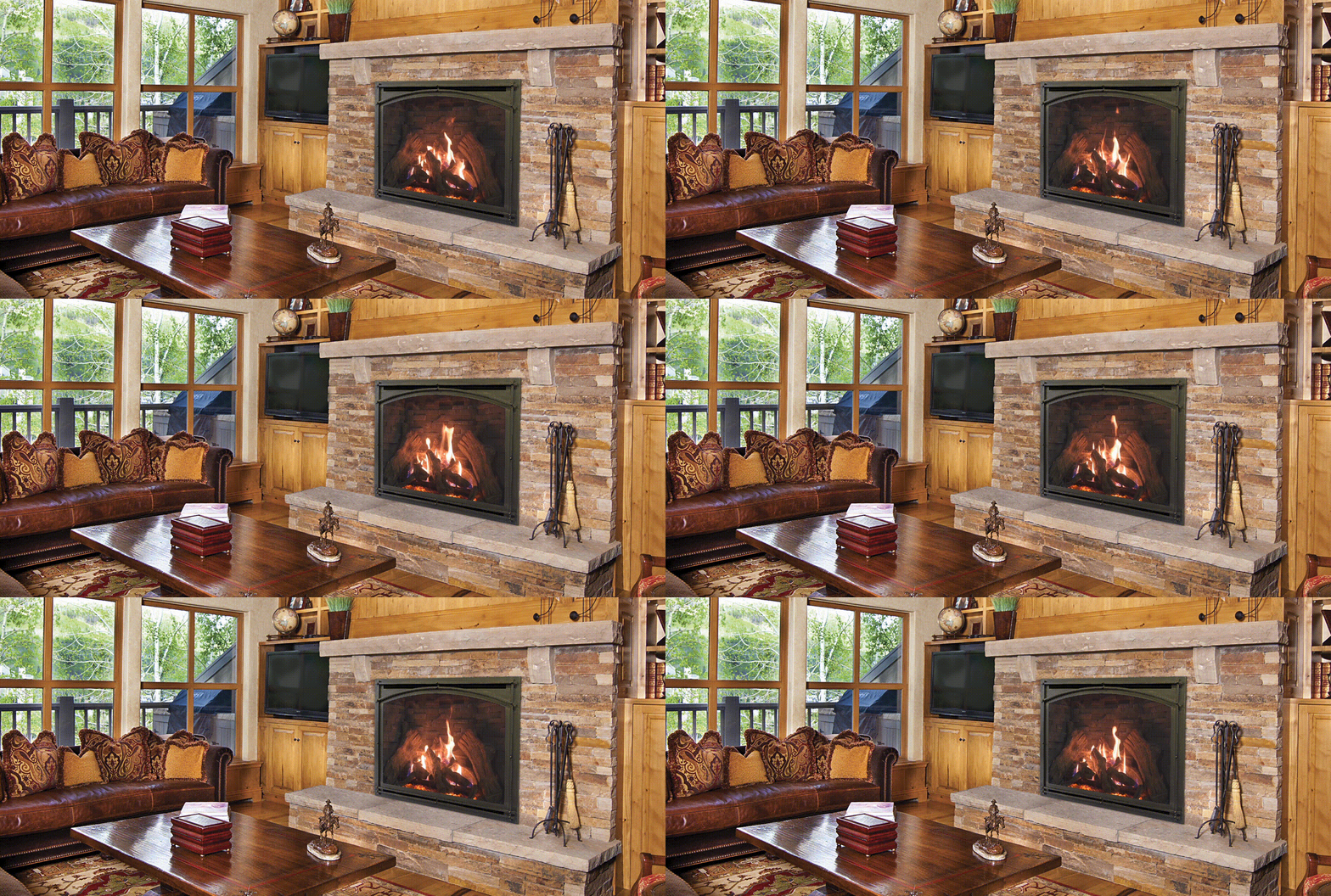
The aesthetic integration challenged my expectations about how modern inserts would look in my traditional stone fireplace. The large viewing window and clean lines actually complement rather than clash with the rustic stone surround. When the fire is burning, the dancing flames visible through the expansive glass create ambiance that rivals open fireplaces while delivering real heat. The matte black finish and minimal trim options I selected help the insert recede visually, letting the stone surround and fire itself remain the focal points.

Environmental considerations factored heavily into my decision to choose a modern EPA-certified insert over other heating options. The efficient combustion dramatically reduces particulate emissions compared to open fireplaces or old stoves, burning wood more completely and cleanly. Using locally sourced firewood from sustainable forestry provides carbon-neutral heating that doesn’t rely on fossil fuels. The satisfaction of heating my home with renewable fuel while producing minimal smoke and emissions adds another dimension of enjoyment beyond just the cost savings and comfort benefits.
After eighteen months of heating primarily with my modern wood-burning insert, I consider it one of the best investments I’ve made in my home. The combination of substantial fuel savings, improved comfort, and maintained ambiance creates a heating solution that checks every box I was hoping to achieve. While the initial cost and learning curve were significant, the daily pleasure of gathering around a genuinely warming fire and the satisfaction of drastically reduced heating bills make every penny and every hour of wood processing worthwhile. For anyone with an inefficient fireplace and access to affordable firewood, modern insert technology offers a compelling upgrade path.

How much can I realistically save on heating costs with a modern wood burning insert?
My natural gas bills dropped 60% during heating season, saving roughly $800 annually. Actual savings depend on fuel costs in your area, home insulation, and how much you rely on the insert versus backup heating. Factor in firewood costs, which vary dramatically by region. I process my own wood from storm-damaged trees, making fuel essentially free beyond time and equipment. Even purchasing seasoned firewood at $250 per cord, my payback period was under three years compared to gas heating.
What’s the difference between catalytic and non-catalytic wood burning inserts?
Catalytic inserts use a honeycomb catalyst to achieve longer burn times and slightly higher efficiency, but require catalyst replacement every 5-8 years at $200-400. Non-catalytic models like mine use baffles and secondary air injection for clean burning, with fewer maintenance requirements. Catalytic inserts excel for overnight burning, while non-catalytic models offer simpler operation and lower long-term costs. Both far exceed EPA standards and traditional fireplace efficiency. I chose non-catalytic for reduced maintenance complexity.

Can a wood burning insert really heat an entire house, or just one room?
My insert effectively heats 1,800 square feet of open-concept space, maintaining comfortable temperatures throughout. Success depends on home layout, insulation quality, and proper sizing. Open floor plans distribute heat better than chopped-up layouts. I use ceiling fans on low to circulate warm air and keep my furnace as a backup for extreme cold or when away. Single-story homes heat more evenly than multi-story homes. Realistic expectations matter; inserts work best as primary heat sources for specific zones rather than whole-house solutions.
How difficult is it to learn proper operation of modern wood burning inserts?
The learning curve took about a month of regular use to master. Key skills include building proper fires, loading wood efficiently, adjusting air controls for desired burn rate, and recognizing optimal operating temperatures. Modern inserts are more forgiving than older technology but still require attention to detail. Properly seasoned wood makes the biggest difference. I read the manual thoroughly, watched online tutorials, and experimented with different techniques. Once mastered, the operation becomes intuitive and rewarding.

What ongoing maintenance should I budget for beyond the initial purchase?
Annual professional chimney sweeping costs $150-250 in my area. Door gasket replacement every 3-5 years runs $50-100. Glass cleaner and maintenance supplies cost maybe $30 annually. Blower motor replacement might be needed after 10-15 years at $150-300. Chimney liner should last 15-20 years before replacement consideration. Overall, maintenance costs are minimal compared to savings. I budget $300 annually for all maintenance and repairs, though actual costs average less.
Is professional installation necessary, or can I install an insert myself?
Professional installation is essential for safety, proper performance, and maintaining warranties. My installer ensured correct chimney liner sizing, proper clearances, secure mounting, and code compliance. Improper installation risks house fires, carbon monoxide issues, and poor draft performance. Installation costs $1,500-2,500, depending on chimney condition and required liner length. Some jurisdictions require permits and inspections. The expertise and insurance coverage professionals provide make DIY installation inadvisable despite the cost savings temptation.

Love the contrast of wood and metal Wood burning fireplace inserts, Home fireplace

Hope Residence Fireplace Stone fireplace designs, Fireplace, Wood burning fireplace inserts

This 140-cm-tall stove is the epitome of straight lines and symmetry Wood burning stoves

Modern & Contemporary Fireplace Manufacturers Gas Inserts & Fireplace Accessories Zone Heating
Build Your Own Wood Burning Fireplace Insert [#] Home Improvement

Styles fireplace

Wood Burning Fireplace Insert Instructions [#] Home Improvement

Related Posts: