December 5, 2025

French Fireplace Screen

My obsession with French fireplace screens began during a trip to Provence, where I stayed in a 200-year-old farmhouse with the most exquisite wrought iron screen I’d ever seen. The delicate scrollwork, aged patina, and effortless elegance transformed the entire room, making me realize how much my basic black mesh screen at home was letting me down. Six months after returning, I finally found a reproduction French screen that captures that same romantic aesthetic, and it has completely changed how I think about fireplace accessories. What I initially dismissed as purely decorative has proven to be both beautiful and surprisingly functional in ways I never expected.

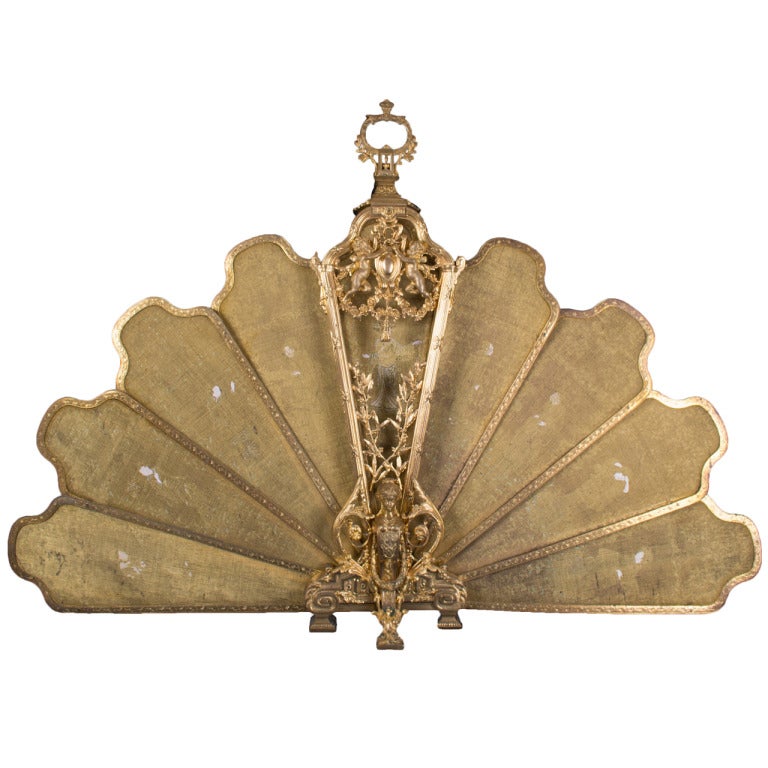
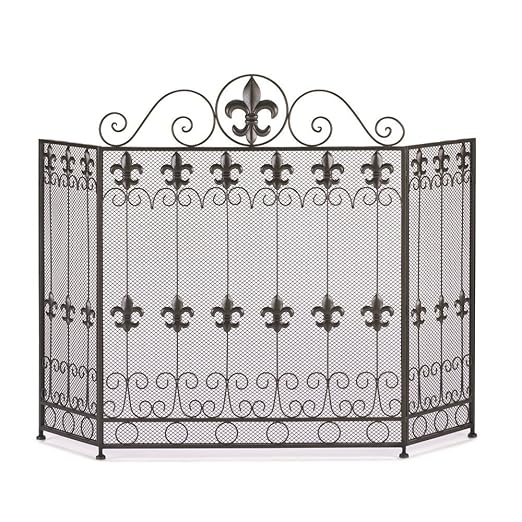
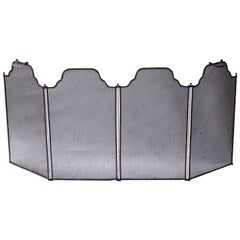
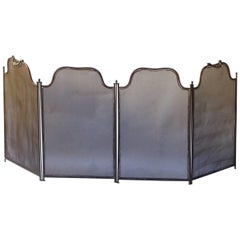
The defining characteristics of French fireplace screens set them apart from standard American designs in subtle but important ways. Traditional French screens feature finer mesh construction, more elaborate metalwork, and lower profile frames that seem to disappear rather than dominate the fireplace opening. The proportions favor width over height, creating horizontal emphasis that complements European fireplace designs with their shallower openings. My screen spans 52 inches wide but stands only 30 inches tall, perfect for my modest firebox while providing adequate spark protection and adding that distinctive Continental flair.

Material selection became crucial once I started seriously shopping for authentic French styling. Wrought iron remains the traditional choice, offering both durability and the ability to forge intricate decorative elements that define the style. However, I also encountered beautiful examples in brass, bronze, and even mixed metals that combined practical frames with decorative brass or copper accents. I ultimately chose hand-forged iron with a natural rust patina finish that suggests age and authenticity while requiring minimal maintenance compared to polished brass that needs constant attention.

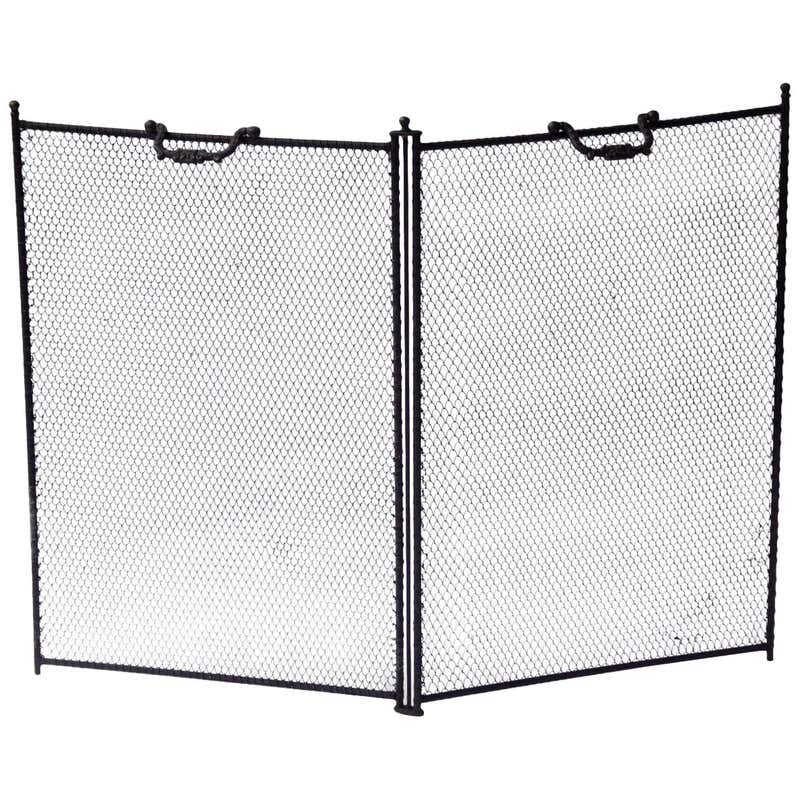
The mesh density consideration surprised me as I learned about French screen construction techniques. Traditional French screens use finer gauge mesh than American counterparts, providing superior ember containment while maintaining better visibility of the fire. This tighter weave requires more substantial frame construction to support the additional weight, explaining why quality French screens feel heavier and more substantial than cheaper alternatives. The mesh on my screen is fine enough to stop even tiny sparks while remaining virtually invisible from normal viewing distances.

Shopping for authentic versus reproduction French screens taught me to recognize quality markers and red flags. Genuine antique French screens command premium prices, often $800-2000 or more, depending on age and condition. Quality reproductions like mine cost $300-600 and offer similar aesthetics with modern safety standards and durability. The key indicators of quality include hand-forged elements versus cast components, welded joints rather than simple rivets, and substantial frame construction that doesn’t flex or wobble when panels are adjusted.

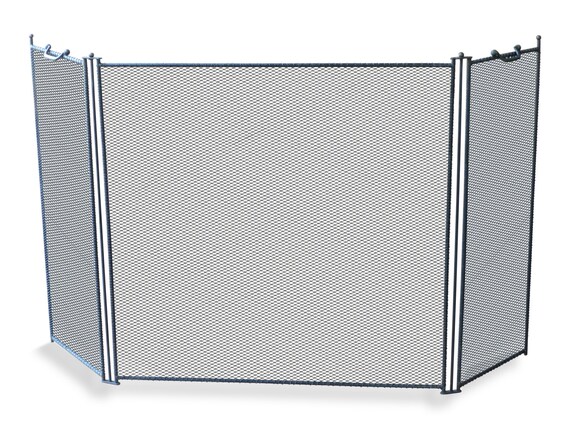
The three-panel folding design typical of French screens offers both practical and aesthetic advantages over single-panel alternatives. The adjustable panels conform to different fireplace opening widths while creating dimensional interest through the angular positioning. When not in use, the screen folds compactly for storage, unlike rigid one-piece screens that require dedicated space. I learned to appreciate how slight adjustments to panel angles affect both spark protection coverage and the play of firelight across the scrollwork, creating ever-changing shadow patterns on surrounding walls.

Installation and positioning required more thought than simply placing the screen in front of the fireplace opening. French screens work best when positioned with proper clearance from the firebox to prevent overheating the metal while maintaining effective ember containment. I experimented with various placements before settling on a position about 8 inches from the fireplace opening, providing optimal safety while preserving clear views of the fire. The freestanding design allows easy removal for fire tending, though the 35-pound weight requires two-handed lifting.

Maintenance of my French screen has proven remarkably simple despite initial concerns about the rust patina finish. Regular dusting with a soft brush removes ash accumulation, while occasional treatment with paste wax protects the finish and enriches the color depth. Unlike polished metals that show every fingerprint and require constant buffing, the matte patina finish actually improves with age and handling. The fine mesh occasionally needs careful cleaning with a stiff brush to remove ash buildup that can affect visibility.

The aesthetic impact exceeded my hopes for how much the right screen could transform my fireplace presentation. The delicate scrollwork and horizontal proportions create visual interest even when the fireplace sits cold during summer months. The aged patina complements both my traditional furniture and modern art collection, bridging style periods in ways that purely contemporary or overtly antique pieces couldn’t achieve. Guests consistently comment on the screen, often assuming it’s an expensive antique rather than a well-chosen reproduction.

After two years of daily use during heating season, my French fireplace screen continues to delight me with its combination of beauty and functionality. The quality construction has held up perfectly despite regular handling and exposure to fire heat. The fine mesh has contained every spark without showing wear or damage. Most importantly, the screen brings me genuine pleasure every time I light a fire, transforming a utilitarian safety device into a beautiful focal point that enhances my entire living room. For anyone seeking to add Continental elegance to their fireplace, a quality French screen offers an accessible way to achieve that sophisticated aesthetic.

What makes French fireplace screens different from standard American designs?

French screens typically feature finer mesh construction, more delicate scrollwork, and lower, wider proportions compared to American designs. The metalwork tends toward graceful curves rather than bold geometric patterns. Traditional French screens emphasize horizontal lines and subtle elegance over imposing presence. The craftsmanship focuses on hand-forged details and aged finishes rather than shiny, modern appearances. My French screen is 52 inches wide but only 30 inches tall, versus American screens that often emphasize vertical height.

Are French fireplace screens as effective at containing sparks as standard mesh screens?

Quality French screens often provide superior spark protection due to finer mesh density. My screen’s tight weave catches smaller embers than my previous coarser American screen. The three-panel design conforms better to different fireplace openings, reducing gaps where sparks might escape. However, very tall fireplace openings might require additional height beyond typical French proportions. Effectiveness depends on proper sizing and positioning. The finer mesh does require more frequent cleaning but offers better protection overall.

How can I tell if a French fireplace screen is an authentic antique or a modern reproduction?

Genuine antiques show consistent patina development, hand-forged irregularities, and period-appropriate construction methods like riveted rather than welded joints. Reproductions often have more uniform finishes and modern welding. Check for maker’s marks, though these can be faked. Authentic antiques typically weigh more due to heavier gauge materials. Price is a clue; real antiques rarely sell for under $800. I chose a quality reproduction for $450 that offers similar aesthetics with better safety standards and durability.

What maintenance does a French fireplace screen require?

My routine involves dusting after each use with a soft brush to remove ash. Monthly cleaning with a slightly damp cloth removes stubborn soot. The patina finish gets occasional paste wax treatment to protect and enrich color. Polished brass or bronze screens require more frequent cleaning with appropriate metal polish. Fine mesh needs periodic brush cleaning to maintain visibility. Store properly during the off-season to prevent rust on unfinished iron. Overall maintenance is minimal compared to the visual impact these screens provide.

What should I budget for a quality French fireplace screen?

Quality reproductions range $300-600, depending on size and metalwork complexity. My 52-inch hand-forged iron screen cost $450. Authentic antiques start around $800 and can exceed $2,000 for exceptional examples. Budget brass-finish screens might be found for $200-300 but often lack authentic detailing. Consider shipping costs, as these screens are heavy. The investment is worthwhile for the dramatic aesthetic impact and years of reliable service. Cheaper alternatives rarely capture the authentic French aesthetic or construction quality.

Will a French fireplace screen work with modern gas fireplaces?

French screens work beautifully with gas fireplaces, often enhancing the traditional appearance. The finer mesh is unnecessary for gas since there are no sparks, but the aesthetic benefit remains. Ensure proper clearances from gas logs, as some generate significant heat. The decorative metalwork helps disguise modern gas fixtures while adding Continental elegance. I’ve seen French screens used successfully with both traditional gas logs and contemporary glass media installations. The key is selecting proportions appropriate for your specific fireplace opening size.

French Fireplace Screens Iron Accents

French Fireplace Screen

French Fireplace Screens

The unique design of this custom made rolling fireplace screen

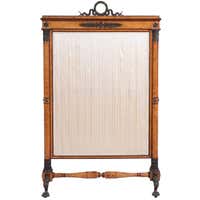
19th Century French Fireplace Screen

Custom Fireplace Screens, Fire Screens – Handcrafted By Wiederrick’s Custom Metalworks

Fireplaces So Large, So Grand, You Can (Almost) Walk Into Them

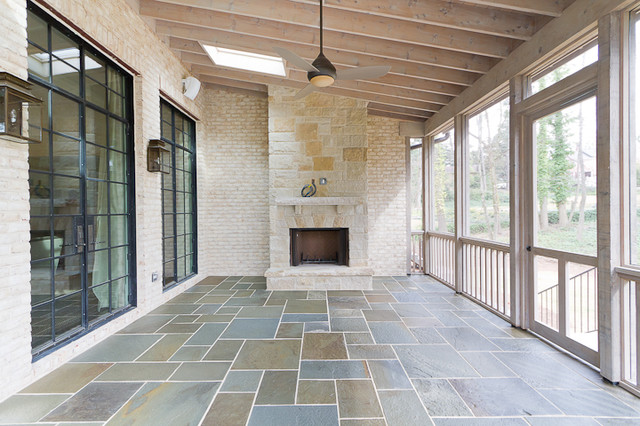
Screened Porch w Fireplace – Transitional – Porch – Atlanta – by Satori Homes & Renovations
Related Posts: